HSC and Aging
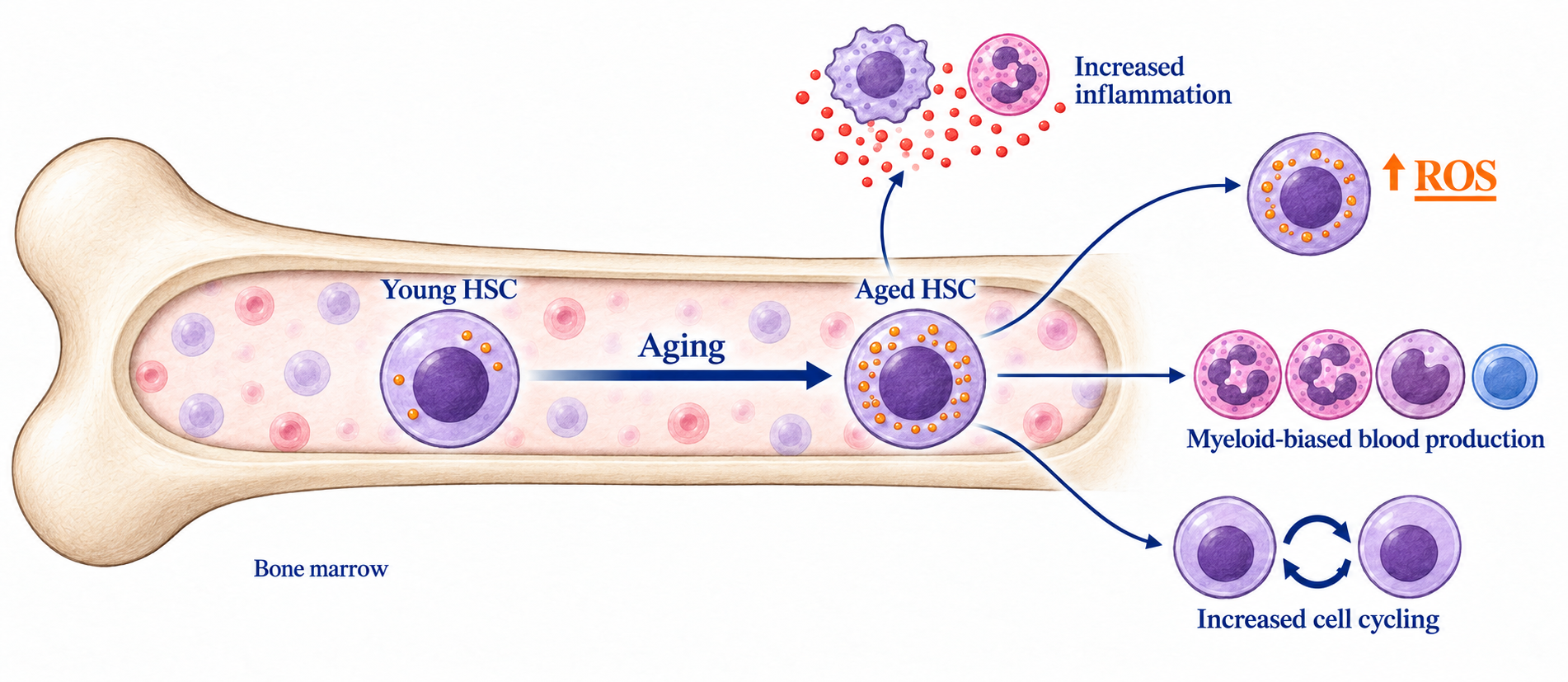
Hematopoietic stem cells (HSCs) produce the blood and immune cells needed throughout life. Their ability to maintain themselves while replenishing multiple blood cell lineages is central to normal hematopoiesis. As HSCs age, their capacity to regenerate the blood system declines, and the balance of cells they produce often shifts toward myeloid lineages. These changes can affect immune function and recovery from hematopoietic stress.
Our research asks whether HSC function can be preserved as animals age. We focus on inflammation and oxidative stress, two closely related processes that can affect how HSCs respond to their environment. Inflammatory signals stimulate HSC activity, but repeated or prolonged exposure may come at a cost to their long-term function.
Reactive oxygen species (ROS) are part of normal cellular signaling, and their levels are tightly regulated. When this regulation is disrupted, elevated ROS can alter HSC behavior and contribute to cellular damage. We are interested in whether controlling oxidative stress can help HSCs withstand inflammatory challenges while retaining their regenerative capacity.
One approach we are studying is treatment with N-acetylcysteine (NAC), an antioxidant that supports cellular redox regulation. We examine whether NAC can preserve HSC function during aging and inflammatory stress.
We address these questions using mouse models, measurements of ROS and proliferation, and tracking of HSC division history. Transplantation experiments provide a functional test of whether treated HSCs retain the ability to sustain blood production over time. Together, these studies help us connect changes in HSC activity with their long-term consequences.
Ultimately, we hope to understand which aspects of HSC aging can be modified and use that knowledge to develop approaches that maintain blood-forming capacity later in life.